Showing posts with label agriculture. Show all posts

Friday, June 30, 2017

NITI Aayog Agri Action Formula and its Effects

इन दिनों शायद ही कोई दिन बीतता हो जब खेती पर गहराते संकट को लेकर कोई खबर न आती हो. उत्तर प्रदेश से लेकर तमिलनाडु तक देश के एक बड़े हिस्से में किसान परेशान हैं. महाराष्ट्र में पिछले दो हफ्ते के दौरान ही 42 किसान खुदकुशी कर चुके हैं. तमिलनाडु बीते 140 साल का सबसे बुरा सूखा झेल रहा है. वहां के किसानों ने कुछ समय पहले दिल्ली के जंतर-मंतर पर धरना दिया था. जून की शुरुआत में मध्य प्रदेश में किसान आंदोलन उग्र हो गया था और पुलिस के साथ टकराव में छह किसानों की मौत हो गई थी. उसके बाद से राज्य से लगभग रोज ही किसानों की खुदकुशी की खबरें आ रही हैं. राजस्थान में भी किसान आक्रोशित हैं.
किसानों की समस्याओं को लेकर अलग-अलग संगठन सक्रिय हैं. इनमें भाजपा के पितृ संगठन राष्ट्रीय स्वयंसेवक (आरएसएस) की शाखा भारतीय किसान संघ भी शामिल है. इन संगठनों का आरोप है कि 2015 में योजना आयोग की जगह गठित सरकारी थिंक टैंक नीति आयोग किसान विरोधी है. हाल में आयोग द्वारा जारी तीन वर्षीय एक्शन प्लान को किसान विरोधी बताते हुए इन संगठनों ने केंद्र सरकार से मांग की है कि आयोग से सुझाव स्वीकार नहीं किए जाने चाहिए.
नीति आयोग का एक्शन प्लान
बीते अप्रैल में नीति आयोग ने तीन वर्षीय एक्शन प्लान जारी किया था. इसमें 2017-18 से 2019-20 तक के लिए कृषि और शिक्षा सहित अर्थव्यवस्था के कई अहम क्षेत्रों में सुधार की रूप-रेखा तैयार की गई है. आयोग के इस एक्शन प्लान में खेती पर ‘कृषि : किसानों की दोगुना आय’ नाम से एक अलग खंड है. प्रधानमंत्री नरेंद्र मोदी ने भी अगले पांच वर्षों में किसानों की आय को दोगुना करने की बात कही है. केंद्रीय गृहमंत्री राजनाथ सिंह ने तो नौ जून को जयपुर में आयोजित एक कार्यक्रम में यहां तक कहा कि अगर 2022 तक किसानों की आमदनी दोगुनी न हो जाए तो जनता भाजपा को ठोकर मार दे.
क्या वाकई 2022 तक किसानों की आमदनी दोगुनी हो जाएगी? इन दिनों खेती के हालात देखें तो यह उम्मीद दूर की कौड़ी नजर आती है. कृषि मामलों के जानकार बताते हैं कि देश में कृषि संकट की स्थिति दिनों-दिन गंभीर होती जा रही है. दूसरी ओर, केंद्र सरकार और नीति आयोग इस संकट के मूल में जाने के बजाय इस क्षेत्र में निजी क्षेत्र की भूमिका बढ़ाने पर जोर दे रहे हैं. जानकार नीति आयोग एक्शन प्लान पर सवाल उठाते हुए इसे ‘कृषि के निजीकरण’ का रोडमैप करार देते हैं.
नीति आयोग द्वारा तैयार किए गए तीन वर्षीय एक्शन में कृषि क्षेत्र में सुधार के लिए कई नीतियों की पैरवी की गई है. इनमें न्यूनतम समर्थन मूल्य (एमएसपी) को सीमित करना, अनुबंध वाली खेती (कॉन्ट्रैक्ट फार्मिंग) के साथ जीएम बीजों को बढ़ावा देना और इस क्षेत्र में निजी कंपनियों के सामने मौजूद बाधाओं को खत्म करने जैसे कदम शामिल हैं.
न्यूनतम समर्थन मूल्य का दायरा घटाना
2014 में केंद्र की सत्ता में आने से पहले भाजपा ने अपनी चुनावी घोषणापत्र में किसानों से उनकी फसल लागत से 50 फीसदी अधिक कीमत पर अनाज खरीदने का वादा किया था. इसकी सिफारिश साल 2004 में कृषि सुधार पर गठित एमएस स्वामीनाथन आयोग ने भी अपनी रिपोर्ट में की थी. कई राज्यों में किसानों के जो आंदोलन चल रहे हैं उनके तहत की जा रही मांगों की सूची में इस आयोग की सिफारिशों को लागू करना भी शामिल है.
उधर, अपने एक्शन प्लान में आयोग का मानना है कि एमएसपी की वजह से देश में फसल प्रणाली बिगड़ रही है. उसके मुताबिक किसान तिलहन और दलहन जैसी फसलों की तुलना में गेहूं, चावल और गन्ने की खेती पर अधिक ध्यान देते हैं क्योंकि इन तीनों फसलों के समर्थन मूल्य में औसतन ज्यादा बढ़ोतरी हो रही है. नीति आयोग के मुताबिक इन फसलों की अधिक खेती की वजह से पानी की उपलब्धता और जमीन की उर्वरता में कमी भी आ रही है.
हालांकि जानकारों की मानें तो जमीनी स्तर पर सच्चाई अलग है. उनके मुताबिक ऐसा नहीं है कि गेहूं, चावल और गन्ने को किसान दलहन और तिलहन पर प्राथमिकता दे रहा है. असल समस्या फसल का सही मूल्य मिलने की है. सरकार एमएसपी पर एक निश्चित मात्रा में ही खाद्यान्न या तिलहन की खरीद करती है. इसके बाद किसान को अपनी फसल बाजार में बेचनी पड़ती है जहां उसे सही दाम नहीं मिलता.
इस साल गेहूं के साथ तिलहन का भी बाजार मूल्य एमएसपी से कम रहा है. दालों की कीमत में भारी गिरावट से किसानों को नुकसान उठाना पड़ रहा है. यह गिरावट इसलिए आ रही है कि कारोबारी कम कीमतों पर दाल आयात कर रहे हैं. स्टॉक ज्यादा होने से कीमतें गिर रही हैं. यही वजह है कि किसान संगठनों ने सरकार से दालों और खाद्य तेलों के आयात पर कर बढ़ाने की मांग की है ताकि आयात को हतोत्साहित किया जा सके. लेकिन आयोग का एक्शन प्लान इस समस्या के बारे में कुछ भी नहीं कहता.
कुल मिलाकर नीति आयोग जहां एक ओर एमएसपी सीमित करने की बात कर रहा है, वहीं जमीनी हालात ये हैं कि सरकार द्वारा एमएसपी घोषित किए जाने के बावजूद किसानों को अपनी फसल की सही कीमत नहीं मिल पा रही. इसे राज्यों में ताजा किसान आंदोलन की एक बड़ी वजह माना जा रहा है. मध्य प्रदेश स्थित राष्ट्रीय किसान मजदूर संघ के नेता शिव कुमार शर्मा एक वेबसाइट के साथ बातचीत में बताते हैं कि मंडियों में किसानों का अनाज सरकारी दर से 30-40 फीसदी कम पर बिक रहा है. इसके अलावा राज्य में सरकारी खरीद एजेंसी भारतीय खाद्य निगम (एफसीआई) ने गेहूं की खरीदारी तय लक्ष्य से पहले ही रोक दी थी. एफसीआई ने इसकी वजह खरीद सत्र की शुरुआत में किसानों द्वारा पंजीकरण नहीं कराना बताया. इसकी वजह से किसानों को प्रति क्विंटल 200 रुपए का नुकसान उठाकर गेहूं बाजार में बेचना पड़ा.
इस महीने किसान आंदोलन शुरू होने के बाद अकेले मध्य प्रदेश में करीब 30 किसान खुदकुशी कर चुके हैं. इस बीच, राज्य के मुख्यमंत्री शिवराज सिंह चौहान का कहना है कि खेती में अब मुनाफा नहीं है और यह अब जनसंख्या का बोझ नहीं सह सकती. उन्होंने साफ-साफ कहा कि उनकी इच्छा है कि कुछ लोग किसानी से उद्योग और सेवा क्षेत्र में आएं. माना जा रहा है कि इन परिस्थितियों में अगर केंद्र एमएसपी में सुधार की जगह इसे सीमित करता है तो किसानों के लिए आने वाले दिन और भी बुरे हो सकते हैं.
नई व्यवस्था
नीति आयोग ने अपने एक्शन प्लान में एमएसपी को सीमित करने के लिए ‘प्राइस डेफिशन्सी पेमेंट’ नाम की भुगतान की एक नई व्यवस्था लाने पर भी जोर दिया है. इसके तहत भंडारण के लिए तय लक्ष्य के बराबर ही एमएसपी पर अनाज खरीदने की बात कही गई है. इसके बाद किसानों के पास जो भी अनाज बाकी रहेगा उसकी बाजार कीमत एमएसपी से कम होने पर ही 10 फीसदी सब्सिडी देने का प्रस्ताव है. विश्व व्यापार संगठन ने भी फसल पर सब्सिडी की सीमा 10 फीसदी तय की है.
हालांकि इस सब्सिडी को हासिल करने की राह में भी पेंच हैं. इसके लिए किसानों को एग्रीकल्चरल प्रोड्यूज मार्केटिंग कमेटीज के पास अपनी फसल और खेत का रकबा दर्ज कराना होगा. ऐसा न करने पर वे इसके हकदार नहीं होंगे. वैसे नीति आयोग के इस विचार के उलट भारत सहित अन्य विकासशील देश अभी तक खाद्य सब्सिडी को सीमित करने के अमेरिका जैसे विकसित देशों के प्रस्ताव का विरोध करते रहे हैं.
निजी क्षेत्र पर जोर
खेती में किसानों की लागत का एक बड़ा हिस्सा बीज, उर्वरक, सिंचाई आदि पर खर्च होता है. पिछले कुछ दशकों के दौरान इन मदों में किसानों का खर्च बढ़ा है. निजी कंपनियों द्वारा विकसित बीज के लिए उर्वरक, सिंचाई, कीटनाशक पर अधिक लागत आती है. जानकारों का मानना है कि यह एक ऐसा चक्र है जिसमें एक बार फंसने के बाद किसान का बाहर निकलना आसान नहीं होता. विश्व के कई देशों में इस वक्त जहां जैविक खेती को बढ़ावा दिया जा रहा है वहीं नीति आयोग ने एक्शन प्लान में इसका जिक्र तक नहीं किया गया है. इसके उलट आयोग ने बीज उत्पादन और वितरण क्षेत्र में निजी कंपनियों की भूमिका बढ़ाने की बात की है. इसके लिए कंपनियों के सामने कीमत नियंत्रण के रूप में मौजूद रूकावट को हटाने की भी पैरवी की गई है.
जेनिटकली मॉडिफाइड (जीएम) बीज को बढ़ावा
नीति आयोग ने जीएम बीज को उत्पादकता बढ़ाने वाला बताया है. साथ ही उसका कहना है कि इससे उर्वरक और कीटनाशक पर लागत में कमी आती है. आयोग ने इस बीज की पैरवी करते हुए यह भी कहा है कि इसकी स्वीकार्यता पूरे विश्वभर के किसानों में बढ़ रही है. इस पर उठ रहे सवालों और आपत्तियों को लेकर आयोग का कहना है कि इसका संबंध बहुराष्ट्रीय बीज कंपनियों से नहीं बल्कि, देशी कंपनियों और संगठनों से है. भारत में अभी तक केवल जीएम कपास को ही मान्यता दी गई है. इसके अलावा जीएम सरसों को मान्यता देने की प्रक्रिया चल रही है.
लेकिन 2012 में कृषि मामलों की संसद की स्थाई समिति ने अपनी 37वीं रिपोर्ट में आयोग के दावों के उलट बात कही थी. ‘कल्टीवेशन ऑफ जेनेटिक मॉडीफाइड फूड क्रॉप - प्रॉस्पेक्ट्स एंड इफेक्ट्स’ नाम की इस रिपोर्ट में कहा गया है कि बीटी कॉटन अपनाने वाले किसानों की सामाजिक-आर्थिक स्थिति में कोई बदलाव नहीं आया है. इसके मुताबिक जीएम बीजों से खेती की लागत बढ़ने से किसानों पर कर्ज का बोझ बढ़ने की आशंका पैदा हो गई है. समिति ने अपनी रिपोर्ट में महाराष्ट्र के विदर्भ का हवाला देकर कहा है कि बीटी कपास से केवल बीज कंपनियों को फायदा हुआ.
अनुबंध कृषि पर जोर
सरकारी थिंक टैंक अपनी एक्शन प्लान में खेती में निजी क्षेत्र की भूमिका बढ़ाकर कृषि सुधार को गति देने की बात कर रहा है. इसके लिए आयोग ने अनुबंध कृषि की पैरवी की है और इसके लिए अलग से कानून बनाए जाने की बात कही है. अनुबंध कृषि के तहत किसानों के साथ एक समझौता किया जाएगा. खेती करने के लिए उन्हें आधुनिक तकनीक और तय कीमत सहित अन्य सुविधाएं मुहैया कराई जाएंगी. इसके बदले अनाज पर अधिकार निजी कंपनी का होगा.
कृषि मामलों के जानकार इस पर चिंता जताते हैं. उनके मुताबिक इससे किसान किसान ही नहीं रहेंगे. वे एक तय रकम और कुछ सुविधाओं के बदले खेतिहर मजदूर बन जाएंगे. इसके अलावा कंपनियों और किसानों के बीच किए गए समझौते में शामिल शर्तों, जैसे किसानों के लिए तय रकम का निर्धारण किस आधार पर होगा, पर भी काफी कुछ निर्भर करता है. एक वर्ग का मानना है कि भारत जैसे देश में जहां न्यायिक प्रक्रिया काफी समय लेने वाली और खर्चीली होती है, वहां कंपनियों द्वारा तय की गई शर्तों को किसानों द्वारा सही से समझना और फिर कुछ गलत होने पर इसके खिलाफ अदालत में दावा करना उनके लिए एक बड़ी चुनौती साबित हो सकता है.
Source: Satyagrah Hindi Website

Saturday, May 7, 2016

Wheat blast

Wheat blast, an agricultural disease, first identified in South America, is caused by the fungus 'Magnaporthe oryzae' which thrives in hot and humid conditions. It poses the following threats:-
1. It can infect huge areas of cultivation resulting in more than 75% yield loss. This loss in agricultural productivity is a major blow to the farmers and to the economy as as a whole.
2. Burning of huge areas if infected standing crops causes environmental pollution. 
3. Contributes towards food scarcity and disease outbreak with disastrous consequences among millions of malnourished people as the disease targets rice and wheat which forms the staple diet of many.
Though India produces blast-resistant varieties of crop, yet it faces potential danger from lurking disease threat as recently reported in Bangladesh. The following measures will help to encounter any adverse situation:-
1.Strict quarantine norms including ban on import of wheat from Bangladesh till their non-infection is authenticated.
2.Exporting blast resistant varieties to South American countries to enable the disease to be uprooted from its point of origin.
3. Directing eastern states of West Bengal and Assam to suspend wheat cultivation in border areas as a precautionary measure.
Active research and developmental activities on the mechanism of the disease causing fungus will help to contain it before it spreads on an epidemic scale.

Fight Draught

In distressing times of water crisis, some villages, which have effectively proofed themselves from droughts, stand out. This was made possible by not just constructing irrigation infrastructure, but also managing them effectively.
METHODOLOGY
1. Water Resource Management:

a. Constructing small ponds, bunds, reservoirs, harvest rainwater, recharge groundwater- maintains adequate water for farming, consumption.
b. Calculate, disseminate information on water levels, consumption and rationalising usage, with the help of hydrologists, Panchayats, village committees etc.
2. Ecological Farming:
a.
Growing trees, furrows, to increase water holding capacity of farms. Practice drip irrigation to increase efficiency.
b. Ecologically sustainable farming based on water availability, soil health etc. e.g. growing green/black gram, millet, pulses, groundnut, instead of cotton, sugarcane in low rainfall areas. Shift sowing season, crop rotation, inter-cropping, organic farming (using cow dung/urine, neem) etc.
c. Community grazing- ensure adequate fodder, and even fuel e.g. by growing bamboo, dhaman etc.
Thus, farmers not only cushioned against droughts, but also greatly enhanced incomes.
ADOPTING FOR OTHER PARTS
1.
Conduct hydrological study, consult and involve local community, for constructing long-lasting infrastructure for irrigation andconservation. MGNREGA ideal for this.
2. Capacity building for water budgeting, managing and sharing resources, planning crops, using fertilisers etc.
3. Ensure awareness and usage of Soil Health Cards for conserving soil nutrition for sustainable agriculture.
4. Promote micro-finance to enable individual infrastructure constructions.
5. Enable a network of “farm schools” (suggested by Prof. Swaminathan) to test, develop, and disseminate new technologies, seeds, practices etc.
Thus, the objective of govt. must be in making villages SMART to make feasible, informed decisions for long-term sustainability.

Saturday, April 23, 2016

Rebooting India’s agricultural policy

The agricultural sector in India has entered a new low since 1988, when India faced severe drought. Presently, India is facing its worst moment in the last three decades. The severity of the situation is evident from the stories of migration and severe water crisis in Maharashtra and elsewhere.
Why the government is to be blamed?
  • It is because the response from the government to these expected shocks has been delayed and inadequate in most cases. In some cases, the delay in response has certainly aggravated the crisis. This has been reflected in government’s responses to the collapse of commodity prices and to the drought this year.
  • Despite having prior information about the impending drought, the government was not prepared. Required relief efforts were not undertaken on a scale larger than a normal drought.
  • Also, most states have not been given their share of the drought relief fund that was promised by the central government.
  • Besides, the actual increase in this year’s budget for the agricultural sector was a modest 27% against a claim of 127% by the finance minister in the 2016 budget.
Policy concerns:
The real problem, however, with the policy of this government on agriculture is not just the financial allocation, which remains inadequate given the enormity of the situation, but also the lack of a coherent policy for achieving the objective of doubling farm income. There has not been a clear road map to revive agriculture.
Need for a new policy:
The old policy lacks a clear understanding of the problems facing today’s Indian agriculture. The reason some of the old prescriptions are less relevant in the current context lies in the changing nature of agricultural production, which has seen a rising share of horticulture, floriculture and livestock.
  • Although grown in an area smaller than food grains, horticulture production is now higher than the total output of the food-grain sector. It now accounts for almost one-third of total agricultural gross domestic product (GDP). So is the case of livestock and dairy, which have seen rapid growth in recent years.
  • These sectors are more vulnerable to weather shocks and hence they require a different kind of support, including marketing and processing support. These are also more vulnerable to price fluctuations, as has been witnessed recently, than traditional crops such as food grains.
Way ahead:
What is required is to insulate these sectors not only from the risk and vulnerability which arise from production-related factors such as weather but also from risks in the price and output market.
  • Most of the farmers (more than 80%) engaged in production of these crops are small and marginal farmers with little support from traditional agricultural policies such as insurance, marketing infrastructure, support prices and subsidies. Hence, our agricultural policies should be geared towards supporting and protecting these farmers.
  • Years of neglect of natural resource management have put enormous stress on the land and water resources of the agricultural sector. In this context, traditional approaches of input intensification are now yielding limited returns—in some cases, negative returns. The focus of the agricultural strategy has to move towards developing new technologies, agricultural practices and crop varieties which are not only less resource-intensive but also environment-friendly.
  • A sustainable agricultural policy requires efforts to not only support and protect farmers from the vagaries of the monsoon and market forces but also to create an enabling institutional framework. The roles of agricultural universities, extension services and cooperative institutions have to be redefined.
  • In the short run, efforts to augment the income of farmers suffering from the drought are needed. This not only requires supporting and strengthening livelihood programmes and safety nets such as the Mahatma Gandhi National Rural Employment Guarantee Act (MGNREGA) but also implementing the much-delayed National Food Security Act.
Conclusion:
The current crisis in agriculture has forced the government to respond to the challenges facing the agricultural sector. The government should not only respond to the immediate challenges facing the farmer and the agricultural sector but also reboot the agricultural policy to create an ecosystem for the future of Indian agriculture. The ambition of doubling the farmer’s income in the next six years may be difficult to achieve but is not impossible.

Sunday, April 10, 2016

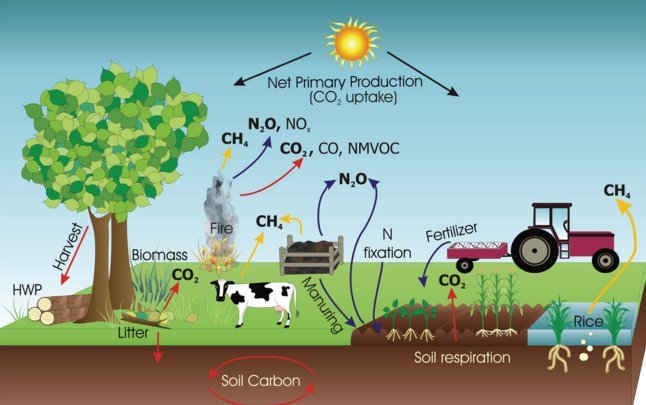
Agriculture is a major driver of climate change

Agriculture is said to be a major driver of climate change because of following reasons:
1. It accounts for 13% of total green house emissions currently. 
2. More CO2 emissions on account of deforestation for agricultural purpose. Eg: Jhum cultivation in India. 
3. Methane emissions from rice cultivation.
4. Enteric fermentation from Animals causes methane emissions. 
5. Nitrous oxide emissions from fertilizer use.
Reducing food wastage would help mitigate climate change in following ways:
1. Food production requires intensive inputs and the processes cause GHG emissions and if food does not reach plates, these emissions are without any substantive output. With population set to rise 10 billion by 2050 the need for food is set to rise and thus stopping food wastage would reduce GHG emissions. 
2. Animal based food causes more GHG emissions and changing dietary practices towards protein based food in developing countries without any effort to reduce food wastage will further increase GHG emissions and ths it is prudent to stop food wastage from not only economic point of view but also ecological point of of view.
There is need to reform food distribution system across countries. India can do its part by efficient supply chain management, promotion of Food processing industry, APMC reforms etc.


  • Thumbnail

Wednesday, September 16, 2015

short term and long term measures to fix India’s agriculture failures

India’s agriculture success story in ensuring food security and self-sufficiency is phenomenal and inspiring for many poor and emerging nations of the world.
At the same time, it is, probably, the only sector that has uncountable issues and structural weaknesses. The ever increasing population, climate change, and dependence on it make agricultural reforms imminent.
Short-term measures:
1. “Lab-to-Land” initiative must educate the farmers of the use of latest technology that is production cost cutting.EG: Tamil Nadu Model
2. “Priority sector lending” of banks must be Aadhar (or robust identity) based to eliminate duplication and targeted lending. Eg:Andhra Pradesh Model.
3. “Wrong crops” that are not suitable to the local climate and irrigation capacity must be discouraged. They demand heavy fertilizers application. Eg: Cotton in Telangana and Sugarcane in Vidharba region.
4. “Decentralized panchayat initiatives” like pond management, canal maintenance, improving local water use efficiency, traditional water harvesting methods and agri-produce storage facilities promotion must be encouraged.Eg: Punjab initiatives.
5. Gram Sabha based authenticated data collection to computerize and identify beneficiaries for various government policies. Eg:Malkangiri of Odisha
Long-term measures:
1. Expansion of formal credit financing through banks to the village level.
2. Building robust network of forward and backward linkages that benefit agriculture and agri-based industries too.
3. National Agricultural Market creation to better market the produce.
4. Devising crop insurance policies that are region and climatic specific (specifically for Vidharba, Telangana,Northern Karnataka).
5. Implementing Shanta Kumar Committee suggestions related to FCI procurement.
6. Following MS Swaminathan MSP+50% formula and “Ever Green Revolution” with “per drop more crop”.
Strong growth driven agriculture sector complements the government’s efforts towards manufacturing too by contributing quality agro-based industries inputs.