Sunday, January 31, 2016

European Council’s Convention 108

In the light of the European Council’s Convention 108, discuss the concept and importance of data privacy, the measures needed to ensure privacy in this digital age.


Convention 108 is the first legally binding international treaty that protects right to privacy of individuals.Data privacy is defined as appropriate use of data.It is the relationship between collection of data,technology,the public expectation of privacy and the legal and political issues surrounding them.Thus,data privacy implies data security
IMPORTANCE-
1.Data privacy gains important in the wake of Fourth Industrial Revolution which is marked by velocity,scope and system impacts where transfer of even minutest data at speed of light across globe is possible.
2.It is important to protect the right of privacy of a person who has reposed immense faith upon an organisation/govt.
3.Its importance further lies in the budding of cyber threats and terrorism where defaulter can be an individual/country/or any organisation.
4.Ethically,data privacy tests the character of an organisation which try to win the trust of public.
MEASURES REQUIRED-
1.make right to privacy fundamental right and at international level include it in Universal declaration of human rights.
2.All policy documents at national and international level should deal with security and privacy standards.
3.Educate the users about their choices and importance of data privacy.
4.Strict laws and measures to punish the defaulters at national and international level and make organisations responsible for the breaching of data privacy
5.In India,Implement the recommendations of AP Shah committee including choice,notice,consent,openness and accountability etc,recognising multiple dimensions of privacy and technology and amend IT Act 2002
6.Using data encryption standard can also help

Saturday, January 30, 2016

गांधी एक प्रेत का नाम है... | अपूर्वानंद | BBC Hindi


साझा कीजि
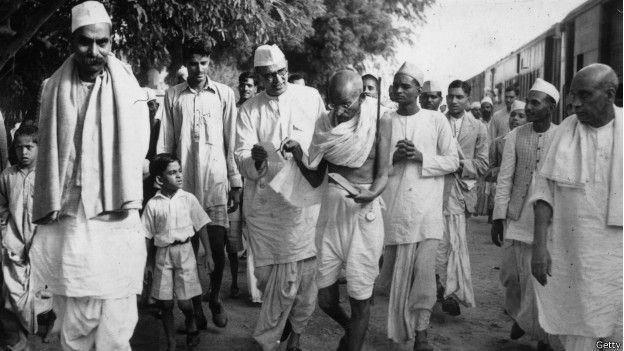
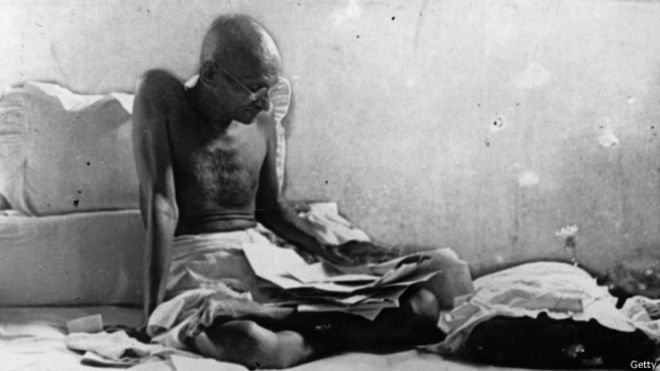
mk_gandhiImage copyrightGetty
गांधी से ख़ुद को जोड़ने की कोशिश करने वाले ज़्यादातर लोग राजघाट तो जाते हैं लेकिन बिड़ला भवन नहीं, क्योंकि वहां जाने के मायने हैं उस व्यक्ति की हत्या से रूबरू होना जिसे राष्ट्रपिता कहा जाता है.
या जैसा एक लेखक ने कहा, बिड़ला भवन में एक प्रेत रहता है. हम उसका सामना करने से घबराते हैं. वह किसका प्रेत है?
गांधी की हत्या को उचित मानने वालों की संख्या कम नहीं है और वे सब राष्ट्रीय स्वयंसेवक संघ, हिंदू महासभा या शिव सेना के सदस्य नहीं हैं.

पढ़िए पूरी रिपोर्ट

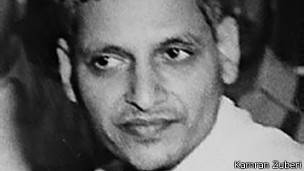
नाथूराम गोडसेImage copyrightKamran Zuberi
एक बार राष्ट्रीय नाट्य विद्यालय में एक सभा में इस हत्या का जिक्र करने के बाद एक श्रोता ने सुझाव दिया कि इस हत्या की आलोचना करते वक्त दूसरे पक्ष के तर्क को नज़रअंदाज नहीं करना चाहिए.
विद्यालय के एक कर्मी ने पास आकर बहुत शांति से पूछा कि क्या मैंने इस पर कभी सोचने की ज़हमत उठाई है कि नाथूराम गोडसे जैसे सुशिक्षित व्यक्ति को यह क़दम उठाने की ज़रूरत महसूस क्यों हुई?
“आखिर कुछ सोच-समझकर ही उन्होंने यह क़दम उठाया होगा !”
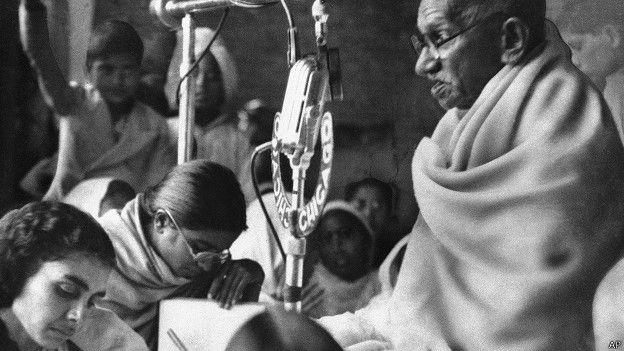
मोहनदास करमचंद गांधीImage copyrightAP
एक घनिष्ठ संबंधी ने मुझसे इस पर विचार करने को कहा कि गांधी की सारी महानता के बावजूद यह तो क़बूल करना ही होगा कि अपने अंतिम दिनों में वह जो कर रहे थे वह एक नवनिर्मित राष्ट्र के हितों के लिहाज़ से घातक था.
जब पाकिस्तान भारत के ख़िलाफ़ आक्रामक कार्रवाइयों में लगा था, गांधी जिद बांधकर उपवास पर बैठ गए थे कि भारत पाकिस्तान को अविभाजित देश के ख़जाने से उसका हिस्सा, पचपन करोड़ रुपये देने का अपना वादा पूरा करे. यह किसी भी दृष्टि से क्षम्य नहीं हो सकता था.
गांधी को समाप्त करना एक राष्ट्रीय बाध्यता बन गई थी क्योंकि यह अनुमान करना कठिन था कि जीवित रहने पर अपनी असाधारण स्थिति का लाभ उठाते हुए भारत सरकार को वे कहां-कहां मजबूर करेंगे कि वह राष्ट्रहित के ख़िलाफ़ फ़ैसला करे. आखिर सरकार उनके शिष्यों की ही थी!
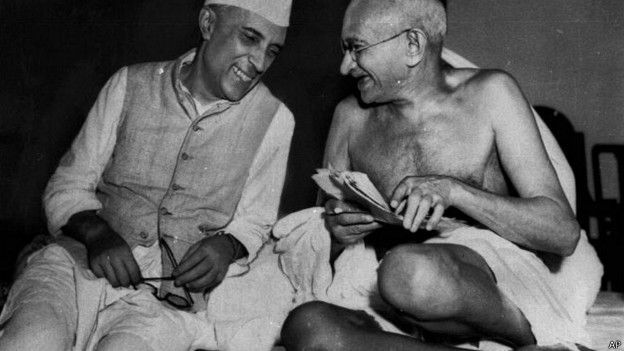
मोहनदास करमचंद गांधी, जवाहरलाल नेहरूImage copyrightAP
गांधी की उपस्थिति और उनका जीवन अलग-अलग लोगों के लिए अलग-अलग दृष्टि से असुविधाजनक था. उनके प्रति नाराज़गी उनके अपनों में भी थी.
अपने पक्के गांधीवादी अनुयायियों की जगह, जो धार्मिक भी थे, उन्होंने एक ‘नास्तिक’ जवाहरलाल नेहरू को स्वतंत्र भारत का नेतृत्व करने के लिए अधिक उपयुक्त पाया था.
उनके इस निर्णय के लिए आज तक गांधीवादी उन्हें क्षमा नहीं कर पाए हैं.
साम्यवादियों की समस्या यह थी कि ग़रीबों की मुक्ति का दर्शन तो उनके पास था लेकिन वे ख़ुद गांधी के पास थे.
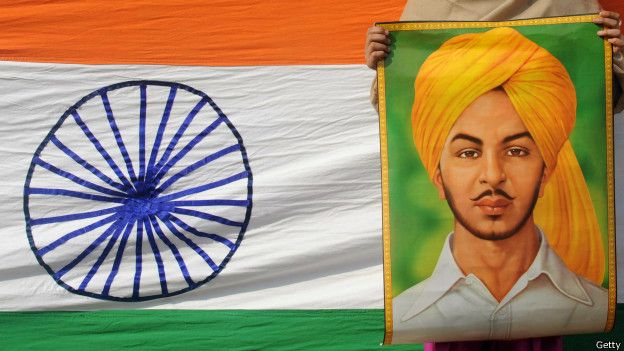
भगत सिंहImage copyrightGetty
इसके लिए वे गांधी की पारंपरिक भाषा और मुहावरे को ज़िम्मेदार मानते थे जो सामान्य जन को उनके अंधविश्वासों के इत्मीनान में रखकर एक लुभावना भ्रमजाल गढ़ती थी.
क्रांतिकारी समझ नहीं पाते थे कि जनता यह क्यों नहीं समझ रही कि वे कहीं अधिक कट्टर साम्राज्य विरोधी हैं और गांधी के बहकावे में क्यों आ जाती है.
यह बात कुछ-कुछ भगत सिंह ने समझने की कोशिश की थी. उनके लेखन से इसका आभास होता है कि अगर वह जीवित रहे होते तो संभवतः उनका गांधी से संवाद कुछ नई दिशाएं खोल सकता था लेकिन भगत सिंह की फांसी के लिए भी गांधी को ही जवाबदेह माना जाता है.
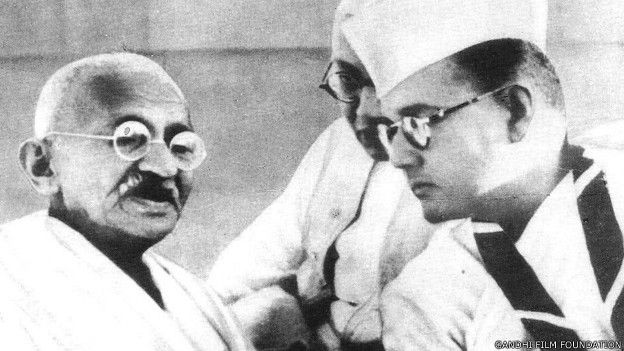
मोहनदास करमचंद गांधी, सुभाष चंद्र बोसImage copyrightGANDHI FILM FOUNDATION
गांधी को सुभाष चंद्र बोस का अपराधी भी माना जाता है.
गांधी की अहिंसावादी राजनीति ने समझ लिया था कि बोस में ऐसे रुझान थे जो उन्हें आखिरकार हिटलर और जापानी नेता हिदेकी तोजो के करीब ले गए. यह बात तो तरुण भगत सिंह ने भी लक्ष्य कर ली थी और वह भी 1928 में.
समाज के निरक्षर, गरीब, नीच जाति के लोगों को सर चढ़ाने के लिए ज़मींदार और उच्च जाति के लोग गांधी से यों ही खफ़ा थे.
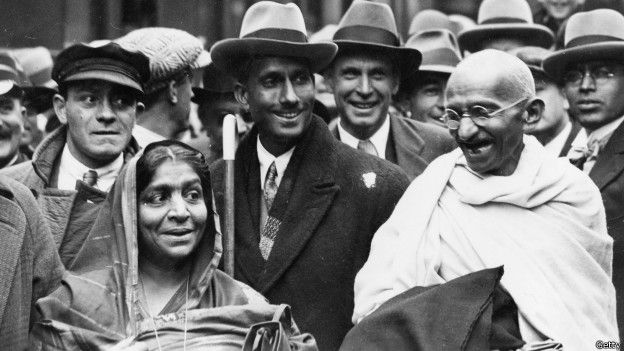
मोहनदास करमचंद गांधीImage copyrightGetty
गांधी ने राजनीति को और राज्यकर्म को संपन्न और अपनी सामाजिक स्थिति के कारण शिक्षित समुदाय के कब्जे से कुछ-कुछ आज़ाद कर यह साबित कर दिया था कि सिर्फ मनुष्य होना ही काफी है.
गांधी से न तो पूरी तरह हिंदू खुश थे और न मुसलमान, ख़ासकर दोनों के संपन्न और ऊंचे तबके.
यह बात अधिकतर लोगों के ध्यान में नहीं कि हिंदू राष्ट्र का नारा देने वाली हिंदू महासभा और इस्लामी राष्ट्र का परचम बुलंद करने वाली मुस्लिम लीग को एक दूसरे के साथ मिलकर सरकार बनाने में उज्र न था.
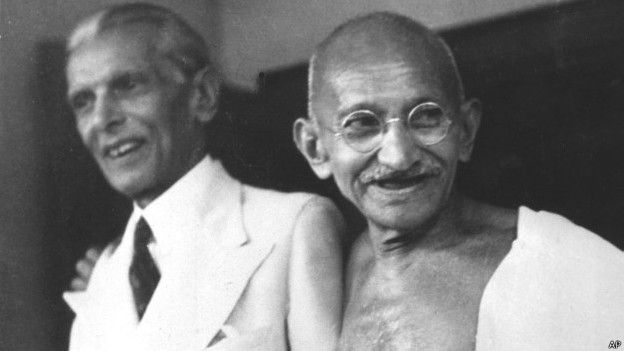
मोहनदास करमचंद गांधी, ज़िन्नाहImage copyrightAP
लेकिन दोनों ही समावेशी राष्ट्रीयता के गांधीवादी सिद्धांत का नेतृत्व स्वीकार करने को तैयार न थे.
आखिरकार गांधी के समावेशी राष्ट्रीयता के आग्रह ने उन्हें ऐसे तमाम लोगों की निगाह में अपराधी बना दिया जो एक धर्म के आधार पर एक साफ़-सुथरी राष्ट्रीय पहचान चाहते थे.
गांधी यह ज़िद करके कि हिन्दू-मुसलमान-सिख-ईसाई या अन्य मतावलम्बी साथ-साथ बराबरी से रह सकते हैं, सब कुछ धुंधला कर रहे थे.
गांधी के इस कृत्य के लिए उन्हें माफ़ करना मुश्किल था इसलिए जिस व्यक्ति ने भी उन्हें मारा हो, उसने एक साथ अनेक लोगों की शिकायत पर अमल किया.
मोहनदास करमचंद गांधीImage copyrightGetty
तभी तो उस मौत पर एकबारगी सदमा तो छा गया लेकिन फिर हत्या की उस विचारधारा के साथ उठने बैठने, हँसने-बोलने में हमने कभी परहेज नहीं किया.
इसीलिए हम बिड़ला भवन जाते नहीं; डरते हैं, कहीं वह प्रेत हमारी पीठ पर सवार न हो जाए !

ZIKA VIRUS

The World Health Organization is convening an emergency committee on Monday to decide if the Zika virus outbreak should be declared an international health emergency.
At a special meeting on Thursday in Geneva, WHO Director-General Dr. Margaret Chan said the virus — which has been linked to birth defects and neurological problems — was “spreading explosively.”
Chan said although there was no definitive proof that the Zika virus was responsible for a spike in the number of babies being born with abnormally small heads in Brazil, “the level of alarm is extremely high.” She also noted a possible relationship between Zika infection and Guillain-Barre syndrome, which can cause temporary paralysis.
“The possible links, only recently suspected, have rapidly changed the risk profile of Zika from a mild threat to one of alarming proportions,” Chan said.
Zika virus was first detected in 1947 and for decades only caused mild disease. But Chan noted that “the situation today is dramatically different.” According to the US Centers for Disease Control, the Zika virus is now in more than 20 countries, mostly in Central and South America.
Chan cited four main reasons why WHO is “deeply concerned” about Zika: The possible link to birth defects and brain syndromes, the prospect of further spread, a lack of immunity in populations in the newly affected areas and the absence of vaccines, treatments or quick diagnostic tests for the virus.
Still, convening an emergency committee does not guarantee that a global emergency will be declared — WHO has held 10 such meetings to assess the Middle Eastern respiratory syndrome coronavirus and no emergency has been announced.
Declaring a global emergency is akin to an international SOS signal and usually brings more money and action to address an outbreak. The last such emergency was announced over the 2014 devastating Ebola outbreak in West Africa; polio was declared a similar emergency the year before.
Marcos Espinal, WHO’s director of infectious diseases in the Americas region, said Brazil is conducting studies to determine if there is scientific evidence that Zika virus causes birth defects and neurological problems. He said they are hopeful Brazil may have data to share in a couple of months.
Brazil’s Zika outbreak and the spike in microcephaly have been concentrated in the poor and underdeveloped northeast of the country, though the prosperous southeast, where Sao Paulo and Rio de Janeiro are located, are the second hardest-hit region. Rio de Janeiro will host the Aug. 5-21 Olympic games.
Earlier this week officials in Rio ramped up their fight against the mosquitoes that spread Zika, dispatching a team of fumigators to the Sambadrome, where the city’s Carnival parades will take place next month.
There is no specific treatment or vaccine for Zika, which is related to dengue — scientists have struggled for years to develop a dengue vaccine but have failed to create an effective shot so far.
- See more at: http://indianexpress.com/article/world/world-news/un-to-decide-if-zika-virus-is-a-global-health-emergency/#sthash.bqr9bgom.dpuf

UDAY (Ujwal DISCOM Assurance Yojana)

Electricity is a subject in the concurrent list and the UDAY (Ujwal DISCOM Assurance Yojana) scheme is a show of collaborative federalism between centre and the states because of their shared responsibilities to revive discoms:
States' part in taking the responsibilities:
1, States will take over 75% of the debts of discoms over the two years till 2016-17. This will give more flexibility to manage the debt, as it is taken over by states.
2, States will take the losses of discoms in a graded manner till 2021
3, State DISCOMs shall comply with the Renewable Purchase Obligations as directed by the Ministry of Power.
Centre's part in incentivising states:
1, The debt taken by states in this regard will not be shown in the calculation of the fiscal deficit of states, giving some respite to state finances.
2, Participating states will receive priority funding from schemes like Deen Dayal Upadhyay Gram Jyothi Yojana, Power sector development fund, Integrated power Development Scehme and other schemes.
3, States will be supported through additional incentives to utilize its full power generation capacity like issue of coal at notified prices, low cost power from NTPC and other CPSEs.
As both the centre and states feel the need to revive Discoms for them to operate efficiently and get them out of the vicious debt cycle in financing their operations, it is clear show of collaborative federalism. Obligations on states and incentives from the centre to make sure the states show interest in the revival of the Discoms is a healthy way and collaborative effort in moving forward to rejuvenate the Electricity Sector of the country.

Friday, January 29, 2016

anti-defection law

The anti-defection law was passed by parliament in 1985. Twenty-five years down the road, it is pertinent to trace the several modifications and to evaluate how well the law has worked.

The 52nd amendment to the Constitution added the Tenth Schedule which laid down the process by which legislators may be disqualified on grounds of defection. A member of parliament or state legislature was deemed to have defected if he either voluntarily resigned from his party or disobeyed the directives of the party leadership on a vote. That is, they may not vote on any issue in contravention to the party’s whip.  Independent members would be disqualified if they joined a political party. Nominated members who were not members of a party could choose to join a party within six months; after that period, they were treated as a party member or independent member.


The law also made a few exceptions. Any person elected as speaker or chairman could resign from his party, and rejoin the party if he demitted that post. A party could be merged into another if at least two-thirds of its party legislators voted for the merger. The law initially permitted splitting of parties, but that has now been outlawed.

Experience so far
In the 24 years of this law, complaints have been made against 62 Lok Sabha MPs. Of these, 26 were disqualified. It is pertinent to note that ten of these disqualifications were after the trust vote of July 2008 (over India-US civil nuclear co-operation). Four cases were made against Rajya Sabha MPs (two in 1989 and two in 2008) and all were upheld. In state legislatures, up to 2004, out of 268 complaints, 113 were upheld.
Challenges and Interpretations
The anti-defection law raises a number of questions, several of which have been addressed by the courts and the presiding officers.

Does the law impinge on the right of free speech of the legislators? This issue was addressed by the five-judge Constitution Bench of the Supreme Court in 1992 (Kihoto Hollohan vs Zachilhu and others). The court said that “the anti-defection law seeks to recognise the practical need to place the proprieties of political and personal conduct…above certain theoretical assumptions.” It held that the law does not violate any rights or freedoms, or the basic structure of parliamentary democracy.


What constitutes “voluntarily” resigning from a party? Various judgements and orders indicate that a member who publicly opposes the party or states his support for another party would be deemed to have resigned from his party. News reports may be used as evidence for this purpose.


Can the decision of the presiding officer be challenged in the courts? The law states that the decision is final and not subject to judicial review. The Supreme Court struck down part of this condition. It held that there may not be any judicial intervention until the presiding officer gives his order. However, the final decision is subject to appeal in the High Courts and Supreme Court.

Issues for consideration
Should the law be valid for all votes or only for those that determine the stability of the government (such as the confidence and no-confidence motions)? The main intent of the law was to deter “the evil of political defections” by legislators motivated by lure of office or other similar considerations. However, loss of membership is hardly a penalty in cases ahead of the scheduled time of general elections—as seen last year. It also loses significance if the House is likely to be dissolved. On the other hand, the voting behaviour may be affected even on issues not related to the stability of the government. A member may be unable to express his actual belief or the interests of his constituents. Therefore, a case may be made for restricting the law to confidence and no-confidence motions. The Dinesh Goswami Committee on electoral reforms (1990) recommended this change, while the Law Commission (170th report, 1999) suggested that political parties issue whips only when the government was in danger.

Should the law apply only to pre-poll alliances? The rationale that a representative is elected on the basis of the party’s programme can be extended to pre-poll alliances. The Law Commission proposed this change with the condition that partners of such alliances inform the Election Commission before the elections.

Should the judgement be made by the presiding officers? Several MPs had raised this issue at the time of passage of the law. The Supreme Court upheld the law in the Kihoto Hollohon judgment.  The Goswami Committee, the Election Commission and the Venkatachaliah Commission to Review the Constitution (2002) have recommended that the decision should be made by the president or the governor on the advice of the Election Commission.  This would be similar to the process for disqualification on grounds of office of profit.

Should there be any additional penalties on defectors? The Venkatachaliah Commission recommended that defectors should be barred from holding any ministerial or remunerative political office for the remaining term of the House. It also said that the vote of any defector should not be counted in a confidence or no-confidence motion.


There is no ambiguity in the legality of current provisions related to these issues. Any change would require legislative action. There is, however, need for public debate on the working of the anti-defection law.


---------------------

The Anti-defection provides for the disqualification of the members of Parliament and state legislatures on the ground of defection from one political party to another. It was enacted to reduce 'Horse-trading' which was eating into the credibility of elected representatives and was increasing the role of money in Indian politics. Though enacted with good intentions, it has been argued that rationalising the law is necessary for improving Parliament's efficiency due to the following reasons:
-Does not differentiate between 'dissent' and 'defection' and curbs legislator's right to dissent and freedom of conscience.
-It's distinction between individual defection and group defection is irrational.
-Does not provide for expulsion of legislators from his party for his activities outside the the legislature.
-Discrimination between an independent member and a nominated member is illogical. If the former joins a party, he is disqualified while the later is allowed to do the same.
-Vesting of decision-making authority in presiding officer is criticised since the officer lacks legal knowledge and experience and may not exercise this authority in an impartial and objective manner due to political exigencies.
Hence, we can conclude that although the law has proved effective in curbing defections, it's further refinement will be in favour of improving Parliament's efficiency.

Article 356

The NDA government has asked for President’s rule in Arunachal and President Pranab Mukherjee has sought clarifications from the central government on the need to invoke Article 356 of the Constitution in this instance.
BACKGROUND
Article 356 is inspired by sections 93 of the Government of India Act, 1935, which provided that if a Governor of a province was satisfied that a situation had arisen in which the government of the province cannot be carried on in accordance with the provisions of the said Act, he could assume to himself all or any of the powers of the government and discharge those functions in his discretion. The Governor, however, could not encroach upon the powers of the high court. This background has imbued this article with a whiff of a ‘controlled democracy’, which is what the British would have intended then.
As the idea that India is a federation of states gained currency, regional and Left parties articulated why federalism was important and the Opposition would protest almost every time Article 356 was imposed.
The Sarkaria Commission notes that while in the first few years after the Constitution, it was invoked only thrice; between 1975 and ‘79, it was invoked 21 times; and between 1980 and ‘87, 18 times.
In 1989, after the Centre dismissed the SR Bommai government in Karnataka, SC had said the validity of a proclamation for President’s rule can be subjected to judicial review.
KEY TAKEAWAY
The Article has almost always been used to dismiss state governments where the party in power is not the same as that ruling at the Centre. So Jawaharlal Nehru found it easy to dismiss the EMS Namboodiripad government in Kerala in 1959, but AB Vajpayee could never bring his government to dismiss BJP’s Narendra Modi government in Gujarat in 2002.
However, a rare exception would be the imposition of President’s Rule in Punjab for over a year by the Indira Gandhi government in 1983. The then Punjab Chief Minister Darbara Singh was battling militancy in 1983.
Recent cases of Article 356
President’s Rule was in force in Delhi with the Assembly in suspended animation from February 14, 2014, to February 11, 2015. This was after Arvind Kejriwal resigned as CM after his move to introduce the Jan Lokpal Bill fell through in the Assembly
Imposed in Maharashtra from September 28, 2014, to October 31, 2014, after Prithviraj Chavan resigned following the break-up of the 15-year-old Congress-NCP alliance in the state.
In Andhra Pradesh from February 28, 2014, to June 8, 2014, due to a political crisis caused by the resignation of CM N Kiran Kumar Reddy and other Congress legislators on February 19, protesting against the Andhra Pradesh Reorganisation Bill that bifurcated the state and created a separate state of Telangana.
In Jharkhand from January 18, 2013, to July 12, 2013, as the Arjun Munda-led BJP government was reduced to a minority after the Jharkhand Mukti Morcha withdrew support. Munda resigned and sought dissolution of the state Assembly.
- See more at: http://indianexpress.com/article/explained/article-356-use-misuse/#sthash.pejJzr0U.dpuf

Can the subaltern speak for himself?

The outrage in the wake of Rohith Vemula’s ‘social murder’ in the campus of the University of Hyderabad raises more questions about the identity and integrity of the institutions of higher learning in India.
Sadly, every attempt has also been made to divert the issue from the public domain by intermixing facts with fiction. Earlier, it was placed within a larger “national/anti-national” discourse. Then it was narrowed down to the issue of a “law and order” problem on the campus. To add to the list of such woes, Rohith’s identity has also been dragged to a stage when his mother had to emerge to defend and clarify facts.
‘Rohith’ is a reminder that ‘subalterns’ cannot speak the truth, either for themselves or for others. Neither can ‘others’ speak for subalterns. Dr. B.R. Ambedkar, who drafted the Indian Constitution, argued that “unlike a drop of water which loses its identity when it joins the ocean, man does not lose his being in the society in which he lives... Man is born not for the development of the society alone, but for the development of his self.” Are we blatantly denying this ‘self’ to many Rohiths? Why did Dr. Ambedkar talk about this ‘self’? Because he knew that this nation need not necessarily represent the ‘self’ of the subalterns collectively. ‘Great’ nationalists cannot comprehend the chemistry of this relationship between the “body and soul” about which Rohith had written in his letter. The power/knowledge discourse appears to hold no good any longer when subalterns cannot even have the right to die. Really, a fate worse than ‘death’!
The changing campus

Most campuses have, of late, become melting pots of anxieties/tensions and feelings of deprivation, marginalisation and alienation. Nobody asks why this happens so often now. Has it got something to do with a ‘new division of labour’ in institutions of higher learning? From the point of view of shrinking social spaces, both academic and sociological, on campuses, consequent upon a ‘new class culture’ being superimposed on the stakeholders of higher education. Obviously, the subalterns are the worst victims of this ‘new class culture’ due to the long-term consequences of social stratification prevailing. More than that, the supposed beneficiaries of the ‘new education’ are the most volatile ones, due to the multiplied uncertainties of the future, the accumulated debts emerging from educational expenses, the rolling back of educational subsidies, cutting down of the number of fellowships/scholarships (limiting itself to a new class of beneficiaries), the lack of burden-sharing social spaces, the decline (and degeneration) of mainstream political forces on campuses, and an increasing acceptance of a highly individualised social Darwinian mindset.
Added to this list are emerging anxieties with regard to the role and responsibilities as well as the institutional-management culture of the present-day educational realm. The commodified notion of education creates nothing but an ‘individualised social Darwinian mindset’. This is not peculiar to campuses alone, which represent only a spectrum of our social space. Whatever happens in this larger social space, from family to the communities, from social organisations to the state, will have its inevitable impact on these thinking and acting beings on campuses. Our children are surely more volatile, more uncertain, more inhibited than they were about two decades back. They may be more skilled, more knowledgeable, more sophisticated and more active today. Yet, their skills, knowledge, sophistication and activity hide the absence of a larger social world in their mind and hearts.
Frustration with institutional and social decay induces new psychological choices, perhaps tragic ones too. This will lead to what Émile Durkheim calls some sort of self-demoralisation: “Man cannot become attached to higher aims and submit to a rule if he sees nothing above him to which he belongs. To free him from all social pressure is to abandon him to himself and demoralise him.” This may or may not create social atmospheric pressure for societies to stabilise themselves, if not for transforming them, but Rohith will remain a symbol of this ‘transformative stage’ because of his ‘politics of representation’. The extra-statutory death penalty which he decided for himself is actually for the entire set of social engineers of our time. Rohith already knew that there were so many skeletons in the social cupboard that not many on and off the campus would be willing to unload them for a real-time change.
Omissions of inquiry

Now that the Union government has announced a judicial inquiry, everyone is expecting the agitating students to go back to the classroom. The victims are, in fact, the first to know that these are political exercises in social futility. The history of judicial commissions shows that they are generally confessions of the failure of the existing political apparatus in dealing with extraordinary situations. Many such reports continue to gather dust on government shelves. However, they tend to serve one major purpose, that is, to provide the state with a convenient escape route to release the accumulated tensions in the system. Victims are to believe that justice will eventfully prevail. This notion of ‘prevalence’ is a continuing saga in the statute culture of the civilised world. Subalterns will never accept the premise that this farcical exercise will help emancipate them. Rather, they will continue to believe that every inquiry is an attempt to legitimise a fait accompli loaded against the victims. In Rohith’s case, facts are too well known. The culprits are among us. But who will bell the big cats?
(K.M. Seethi is Professor and Director, School of International Relations and Politics, Mahatma Gandhi University, Kerala.)
http://www.thehindu.com/opinion/op-ed/on-integrity-of-higher-education-institutions-in-india/article8155006.ece

social transformation that took place during Gupta period

The social transformation that took place during Gupta period included:
1. endogamy (that is marrying within one’s caste) started
2. Hardening of caste system and enforcement of social strictures against marriage between castes, as enshrined in the Dharmasastra
3. revival of sanskrit
4. christianity had arrived but confined in the malabar area
5. sacrifice replaced by worship and meditation was somewhat replaced by devotion and bhakti
6. shakti cult emerged, worship of mother goddess started, tantrism became prevalent
7. Subordination of women citing religious scriptural authority started
The effects of these transformation are seen even today in the form of:
1. Genetic history of indian's which shows caste-mixing declined since gGupta period
2. Intra-caste marriage is still the norm within practicing hindus 
3. Women still face restrictions and discrimination sanctioned by hindu scriptures
4. Shakti cult/worship of female deities in hinduism continues
5. christianity is still a minority religion
6. strict caste-system still plagues the indian society.

Thursday, January 21, 2016

The various advantages which India can accrue of due to falling crude prices

The various advantages which India can accrue of due to falling crude prices can be seen under the following heads –
1. Economic – 
(i) Reduced import bill may lead to lower fiscal deficit and hence the government should attempt to achieve its obligations (3% of GDP) under the FRBM Act 
(ii) Accelerate the completion of critical infrastructural projects since the energy costs for completing the project will be significantly lower
2. Strategic – 
(i) Expedite the building up of Strategic Oil Reserves 
(ii) Enter into futures-prices contracts with Oil exporting countries for long durations
3. Social – 
(i) Deregulate the prices of kerosene and gas to revoke the entrenched subsidy culture
(ii) Use the low gas prices to enhance low-cost fertilizer production which could immensely benefit farmers
4. Environmental – 
(i) Low crude prices will ease pressure on coal plants and can be used to modernize coal-plants to ensure minimum environmental safeguards
(ii) Impose the ‘Special fuel upgradation Cess’ on petrol and diesel to upgrade India’s oil refineries to Bharat Stage 4 and 5 as recommended by Saumitra Chaudhri Committee
5. Policy-making – 
(i) The Integrated Energy Policy 2006 should be restructured to allow considerations of using Strategic Oil reserves during high-crude price phase
(ii) Expedite domestic oil exploration and non-crude energy development to prevent shocks from political trouble in West Asia
These measures could allow the government to fully utilize the benefits of low-crude price phase to allow Indian economy to enter into higher growth trajectories.

Wednesday, January 20, 2016

Is DOHA Dead?


The Doha Round of world trade negotiations - also known as the Doha Development Agenda , was launched in Doha, Qatar in November 2001. The talks aim at further liberalizing trade, whilst making it easier for developing countries, particularly Least Developed Countries (LDCs), to integrate into the WTO multilateral system. It’s the ninth round since the Second World War and the first since the WTO inherited the multilateral trading system in 1995. Progress in negotiations stalled after the breakdown of the July 2008 negotiations over disagreements concerning agriculture, industrial tariffs and non-tariff barriers, services, and trade remedies The most significant differences are between developed nations led by the European Union (EU), the United States (USA), and Japan and the major developing countries led and represented mainly by India, Brazil, China, and South Africa. There have been repeated attempts to revive the talks, so far without success. The failure of Doha has led to the spurt of many bilateral free trade agreements and trading blocks. At present, three major trade deals are either at the final stages of negotiations or already completed. These agreements leave out most of the developing countries particularly the LDCs. Apart from these, many plurilateral agreements have been signed in the WTO forum. Unlike the multilateral WTO negotiations like Doha round which require consensus of all members and therefore nobody can be left out and the interests of poor countries can be taken care of, in plurilateral agreements countries can ‘opt out’. In the 10th ministerial meet in Nairobi, Kenya in Dec,2015, for the first time since the Doha round was launched, the WTO’s 164 members, declined to “reaffirm” Doha’s mandate. The declaration noted that many members reaffirm the DDA while others do not but that “nevertheless, there remains a strong commitment of all Members to advance negotiations on the remaining Doha issues.It also opened the door to discussing new issues and focusing more on delivering smaller packages of trade reforms. It also marked a victory for the US and EU, who alongside other developed economies have argued that clinging to the long-stalled Doha negotiations was making the institution irrelevant in a changing global economy. India and civil society groups, however, said the result in Nairobi was a blow to the world’s poor, arguing that by walking away from the Doha round, which put at least a rhetorical emphasis on development, the WTO was betraying its poorest members. Nairobi again demonstrated the power and influence of the developed countries especially the US. More importantly it showed that the lack of bargaining power of the Global South. It also showed that the world is still some distance away from becoming a genuine multipolar world. Inspite of the emergence of China and other BRICS countries, the global power structure remains intact. It saw the emergence of a ’coterie’ of few countries like US,EU, Brazil, China and India undertaking closed door negotiations to take the final decisions. There was no unity among the developing countries as Brazil mostly took the side of US and EU along with the DG of WTO Roberto Azevêdo of Brazil. India was unable to forcefully defend positions it had articulated over the past two years. It is now expected that the developed countries will bring in the ‘Singapore’ Issues like investment, competition, transparency in government procurement into the negotiating table in the next WTO ministerial conference.